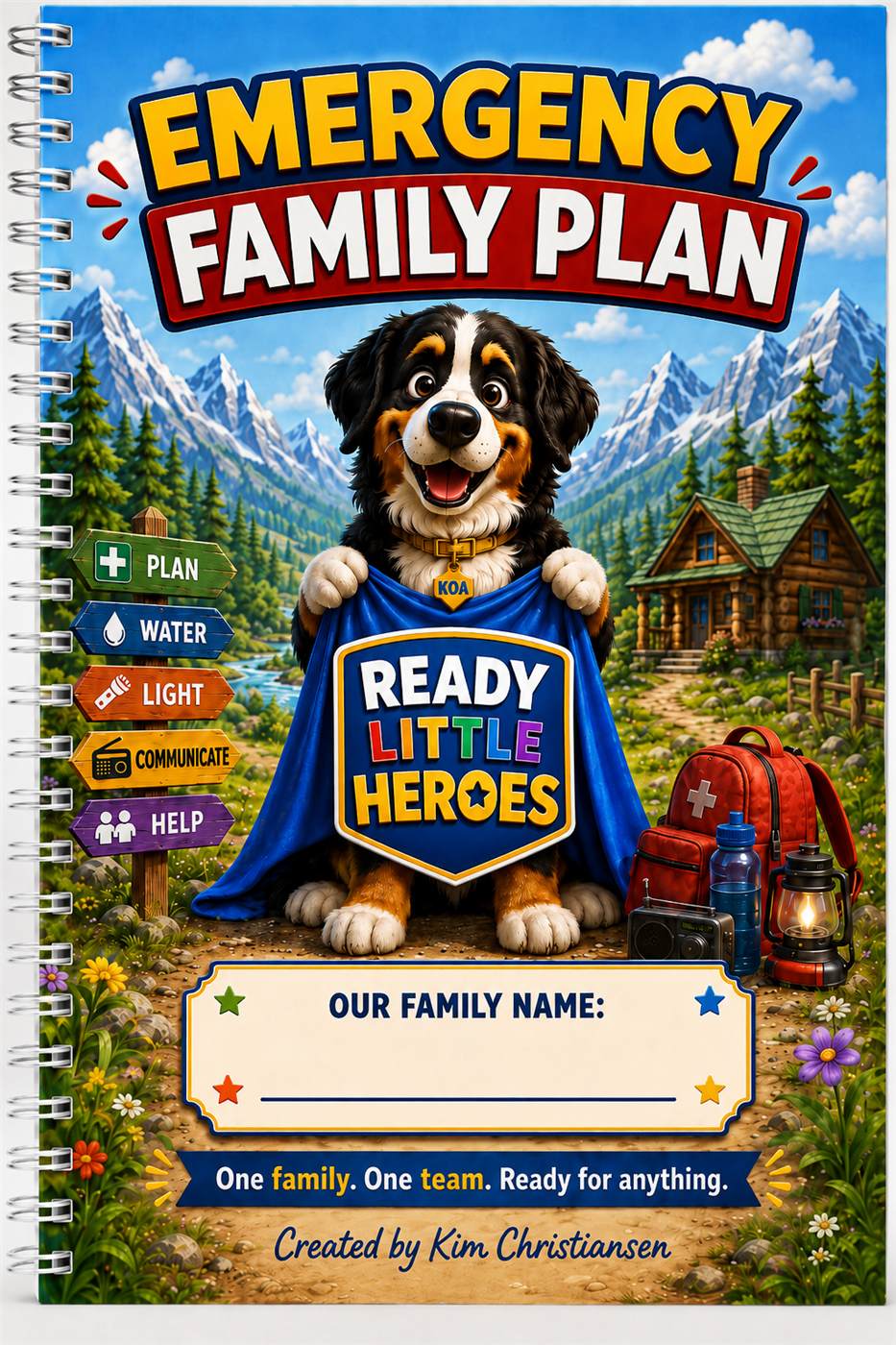
One family. One team. Ready for anything.
Build a private family, pet, and emergency preparedness packet. Complete only what is useful to you, then print the pages for your home binder or go-bag.
This is how it will appear on your printed cover: THE ______ FAMILY
Ready families feel calmer, move faster, and protect what matters.
Work through each section below. Everything auto-saves privately in your browser.
Family Plan
Meeting places, contacts, medical notes, and evacuation responsibilities.
Pet Plan
Profiles, medications, carriers, veterinarians, and evacuation needs.
Supply Readiness
Track go-bag, home, vehicle, child, and pet emergency supplies.
Next best steps
Private by design
No accounts, no server. Your data is saved locally on your device using browser storage.
Nothing uploadedFamily Preparedness Plan
Add only the information your household wants available during an emergency. Avoid account passwords, Social Security numbers, or full financial details.
Household overview
Family members
Keep medical details brief and limited to what a caregiver or responder may need immediately.
Emergency responsibilities
Assigning a job to each adult prevents freezing under stress. Discuss and practice these roles as a family.
Communication plan
Pet Emergency Plan
Create a profile for each pet, including evacuation needs, medications, carriers, and a backup caregiver.
Pet evacuation checklist
Emergency Supplies
Use these checklists to build supplies gradually. Quantities should reflect household size, climate, medical needs, and local hazards.
Disaster Quick Guides
Starter guidance for common emergencies. Always follow instructions from local officials and emergency services.
First-Aid Basics Every Adult Should Know
Severe bleeding
Apply firm direct pressure with a clean cloth for 10+ minutes. Do not remove soaked cloths — add on top. Use a tourniquet on a limb only if bleeding won't stop.
Choking (adult/child >1)
If they can't cough or speak: 5 back blows between shoulder blades, then 5 abdominal thrusts. Repeat until dislodged or they collapse — then start CPR.
CPR (untrained)
Push hard and fast in the center of the chest — 100–120 per minute, about 2 inches deep. Don't stop until help arrives or the person responds.
Burns
Cool under running water 10–20 minutes. Don't use ice, butter, or ointments. Cover loosely with clean cloth. Seek care for burns larger than a palm, on face, hands, or joints.
Suspected stroke — F.A.S.T.
Face drooping, Arm weakness, Speech difficulty, Time to call 911. Note the time symptoms started.
Anaphylaxis
Use epinephrine auto-injector immediately if available, then call 911. Lay person flat with legs raised unless breathing is hard. A second dose may be needed after 5–15 minutes.
This quick guide does not replace CPR/First Aid training. Follow 911 dispatcher and emergency responder instructions.
Emergency Contacts & Numbers
Fill in the people, agencies, and services your family may need to reach. Print this page and keep a copy in your go-bag, car, and each child's backpack.
Always-good-to-know numbers
Emergency (US)
911 — fire, medical, police
Poison Control (US)
1-800-222-1222
Suicide & Crisis Lifeline
988 (call or text)
Disaster Distress Helpline
1-800-985-5990
Non-emergency police
Look up your local number in advance and write it below.
ASPCA Animal Poison Control
1-888-426-4435 (fee may apply)
Personal emergency contacts
Utilities & services
Important Documents
Use this as a checklist. Store originals securely. Do not type full account numbers, passwords, or Social Security numbers into this app.
Secure-document checklist
Where are secure copies stored?
If Loss Occurs — After a Disaster
If your home is damaged or destroyed, work through this list in the first days. Take photos of everything before you clean up or discard anything.
Step 1 — Apply for FEMA disaster assistance
FEMA aid can cover temporary housing, home repair, replacement of essential items, and other disaster-related expenses not covered by insurance. Apply as soon as a federal disaster is declared for your area.
- Online: DisasterAssistance.gov
- Phone: 1-800-621-3362 (TTY 1-800-462-7585) · 7 a.m. – 11 p.m. local time
- App: Search "FEMA" in the App Store or Google Play
- In person: Visit a Disaster Recovery Center — find one at egateway.fema.gov/ESF6/DRCLocator
Have ready: Social Security number, current address, damaged home address, insurance info, household income, bank routing/account for direct deposit, phone and email.
Step 2 — File your insurance claim
Call your insurance company before you do anything else, even before FEMA in many cases — FEMA aid is not a replacement for insurance. Ask them exactly what they need and get a claim number.
- Report the loss by phone and follow up in writing (email is fine).
- Ask about Additional Living Expenses (ALE) for temporary housing.
- Do not throw away damaged items until an adjuster documents them.
- Keep every receipt — hotels, meals, clothing, tarps, cleanup — for reimbursement.
- Get repair estimates in writing from licensed contractors only.
Optional policy numbers remain on this device and on copies you print.
Step 3 — Replace lost documents
- Birth certificates: Order from the vital-records office of the state where each family member was born (CDC "Where to Write" directory).
- Social Security card: ssa.gov/number-card/replace-card · 1-800-772-1213
- Driver's license / state ID: Contact your state DMV — many waive fees after a declared disaster.
- Passport: travel.state.gov · 1-877-487-2778
- Tax records: IRS transcripts free at irs.gov/individuals/get-transcript · 1-800-908-9946
- Medical records: Contact each provider; pharmacies can reprint recent prescription history.
- Immigration documents: USCIS Form I-90 / I-102 · uscis.gov
Step 4 — Health & safety in the recovery zone (CDC)
Injuries and illness rise sharply after a disaster. Review CDC guidance before entering a damaged home.
- General: cdc.gov/disasters · CDC-INFO 1-800-232-4636
- Flood cleanup & mold: cdc.gov/mold — wear N95, gloves, goggles; discard soaked porous materials.
- Drinking water safety: cdc.gov/healthywater/emergency — boil 1 minute (3 min above 6,500 ft) or use 8 drops unscented bleach per gallon.
- Food safety: "When in doubt, throw it out." Discard refrigerated food after 4 hours without power.
- Carbon monoxide: Operate portable generators outdoors more than 20 feet from windows, doors, and vents; never in a home, basement, garage, or carport. Keep grills and gas engines out of enclosed spaces.
- Mental health: Stress reactions after disasters are common. Disaster Distress Helpline 1-800-985-5990 (call or text) — free, 24/7, multilingual.
- Tetanus: Get a booster if your last shot was over 5 years ago and you have any wound from debris.
Step 5 — Shelter for you and your pets
- American Red Cross shelters: redcross.org/shelter · 1-800-733-2767 · text SHELTER + your ZIP to 43362
- Pet-friendly shelters: Under the PETS Act, many public shelters must accommodate service animals and coordinate pet sheltering. Call ahead — some house pets in a co-located facility, not the same room.
- Boarding & foster networks: Humane Society disaster resources · ASPCA disaster preparedness
- Lost pets: Post to Pet FBI, Petco Love Lost, and local shelters within 24 hours; check in person every 2–3 days.
- Livestock & large animals: Contact your state Department of Agriculture emergency line.
Step 6 — Financial & utility recovery
- SBA disaster loans (homeowners, renters, businesses): sba.gov/disaster · 1-800-659-2955
- IRS disaster tax relief: irs.gov disaster tax relief
- Unemployment / Disaster Unemployment Assistance: file with your state workforce agency.
- Utility shutoff: Only qualified personnel should restore gas or main electricity — do not switch it back on yourself.
- Beware of scams: FEMA never charges a fee. Verify contractors' licenses, get written estimates, never pay large sums upfront.
Local evacuation routes & neighborhood info
Fill in the specific streets, landmarks, and destinations for your neighborhood. Practice each route at least once by car and once on foot. Official evacuation instructions override your family's preplanned route.
Look up your official local routes: Ready.gov/evacuation · your county/city emergency management website · state DOT "evacuation routes" map.
Printable Packet Preview
The pages below automatically use the information you entered. Blank fields remain available for handwriting after printing.